Morning Session – Indian Financial Market (30 Apr 2026)
Share




Indian Rupee
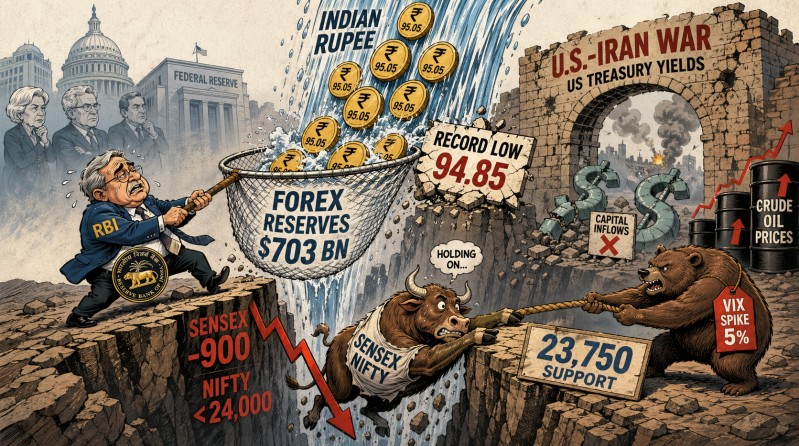
The Indian rupee opened at 95.05 against the U.S. dollar on Thursday, compared to its previous close of 94.845 on Wednesday. The Reserve Bank of India’s efforts to stabilize the rupee are facing significant strain as the currency hit a record low of 94.85, driven by a widening balance of payments deficit and geopolitical volatility from the ongoing US-Iran war. While the RBI has aggressively intervened to curb speculation and utilize its $703 billion in forex reserves, economists warn that dwindling capital inflows—marked by a nearly $20 billion exodus from local equities—and elevated oil prices are creating fundamental pressures that dollar sales alone cannot fix. With major institutions like Barclays and IDFC First Bank forecasting further depreciation toward the 95–97 range, analysts suggest the central bank may soon be forced to move beyond market intervention toward structural policy shifts, such as easing foreign borrowing rules, to counter the persistent economic headwinds.
Indian Equities
Following the weak pre-market cues, the Indian stock market has opened sharply lower, with the Sensex plunging over 900 points and the Nifty 50 breaching its crucial 24,000 support level to trade near 23,920. This downward slide reflects a broad-based sell-off across sectors—most notably in Bank Nifty—driven by a nearly 5% spike in the India VIX and persistent pressure from rising crude oil prices. As the indices struggle to hold their ground, the market has shifted into a defensive mode, with the focus now on whether the Nifty can stabilize above the next major support zone of 23,750 or if the hawkish global sentiment will continue to fuel further intraday declines.
Indian Government Bonds
Indian equity and debt markets are facing significant downward pressure on April 30, 2026, as the SENSEX and NIFTY both opened in the red following a dual blow of rising crude oil prices and a surge in US Treasury yields. The Federal Reserve's recent decision to hold interest rates steady—marked by its most divided internal vote since 1992—has sparked a global selloff in bonds, pushing the Indian benchmark 10-year yield toward the 7.05% mark. These macroeconomic headwinds, compounded by persistent foreign institutional investor (FII) selling and geopolitical uncertainty in West Asia, have created a bearish environment for domestic securities and the rupee, even as investors await key Q4 earnings from major firms like Hindustan Unilever and Adani Ports.
The 10-year benchmark bond yield was trading at 7.070%.
Share

Recent Blog



Ready to make smarter forex decisions?
Get timely market updates straight to your inbox and WhatsApp.